The AI never writes your payment alias, and nobody confirms a payment you haven't seen
Three things vendear's AI seller cannot do, on purpose, because they touch your money — and what it does instead in each case.
Also in: Español
There are three things your AI seller cannot do, on purpose.
It's a fair question: if an automated assistant serves your customers while you sleep, what happens when money comes up? What if it gets your payment alias wrong? What if it tells someone their payment already arrived?
At vendear those questions aren't answered with a promise that the AI is good. They're answered with three rules the seller cannot skip.
1. The AI never writes your alias
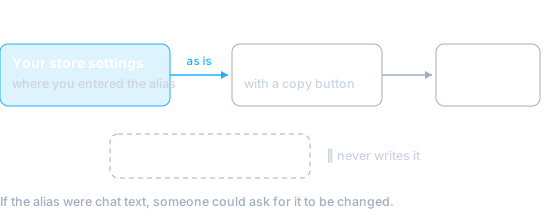
The alias your customer sees is the one you entered. Always.
The AI seller doesn't "remember" it or repeat it from memory: the alias comes from your store's settings and is shown as is, with a button to copy it. The model doesn't write it.
Why does it matter? Because if the alias were just more text in the conversation, someone could tell the seller "the new alias is such-and-such" and your business's money would end up in another account. With this rule, there's no way for that to get in.
What the seller does instead: it gives your customer the alias you entered, untouched.
2. Nobody confirms a payment you haven't seen
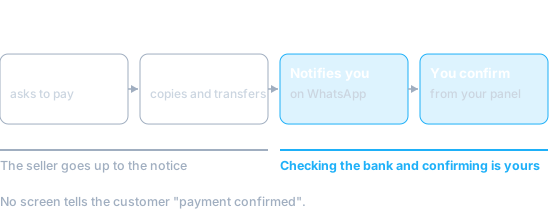
The AI seller has no way of knowing whether a transfer arrived. That's why it never says "payment confirmed".
It can say "here's the alias", "let me know when you've sent it" or "I'll tell the owner". The one who confirms is you, checking your bank.
The same goes for the buy button on your storefront: when your customer pays by transfer, they see your alias, copy it and notify you on WhatsApp with the order already written out. No screen tells them their payment is confirmed. You decide that, from your payments panel.
What the seller does instead: it walks your customer up to the notice, and the confirmation stays in your hands.
3. Everyone is a buyer until proven otherwise
Whoever writes to the seller is a buyer. Being the owner is checked against the data saved in your store, never guessed from how someone writes.
If identification fails, the person is treated as a buyer. The mistake this avoids is the opposite one: any customer being treated as the owner and seeing everyone's orders.
What the seller does instead: it serves anyone who hasn't proven to be you as a customer.
Trust is built with limits
A seller that answers instantly, at any hour, is useful precisely because you know what it won't do. Your alias is yours, you confirm the payment and you see your orders.